Tag Archive for: industrial

The Art of Suggestion: Communicating Visual Complexity Through Minimalism

How do we depict the world in a way that communicates its vast richness, nuance, and detail without overwhelming the viewer or sacrificing aesthetic appeal? This is a question I return to often in my studio practice as a visual artist, especially when working in acrylic and exploring American industrial and roadside landscapes.

As artists, we are constantly negotiating between clarity and chaos. Our visual world is intricate, full of layered textures, shifting light, and endless information. Yet in art, more isn’t always more. A canvas cluttered with detail can quickly become noisy, distracting, or even uninviting. So the question becomes: how can we express complexity while preserving beauty and balance?

Lately, I’ve been exploring this through the power of minimalism in painting. Not minimalism in the strict, traditional sense, but rather the idea of evoking more with less. I’m interested in how the human mind fills in the blanks, completing implied shapes and textures with its natural tendency toward gestalt perception; the psychological phenomenon that leads us to see patterns, wholes, and connections even when only fragments are present.

In practical terms, this means working with suggestion and illusion. It means allowing negative space to speak. It means painting a weathered building or a distant highway sign with a few confident marks instead of rendering every crack and rust stain in photographic detail. It’s about trusting the viewer and the medium to do some of the heavy lifting.

This process has opened new doors in my work. It challenges me to think not just about what I see, but what I want others to see. What is essential in a composition? What can be left out to make what remains even more powerful?

The result is work that feels both grounded and open, rooted in real landscapes and memory, but abstracted just enough to invite interpretation. I want to leave room for nostalgia, imagination, and the viewer’s personal experience to come into play.

Whether I’m painting rusted water towers, factory rooftops, or the glow of neon signs along a lonely stretch of road, I’m not just depicting objects. I’m invoking a feeling. A sense of place. A fleeting memory. And I’m learning that you don’t need to spell everything out for people to feel it deeply.
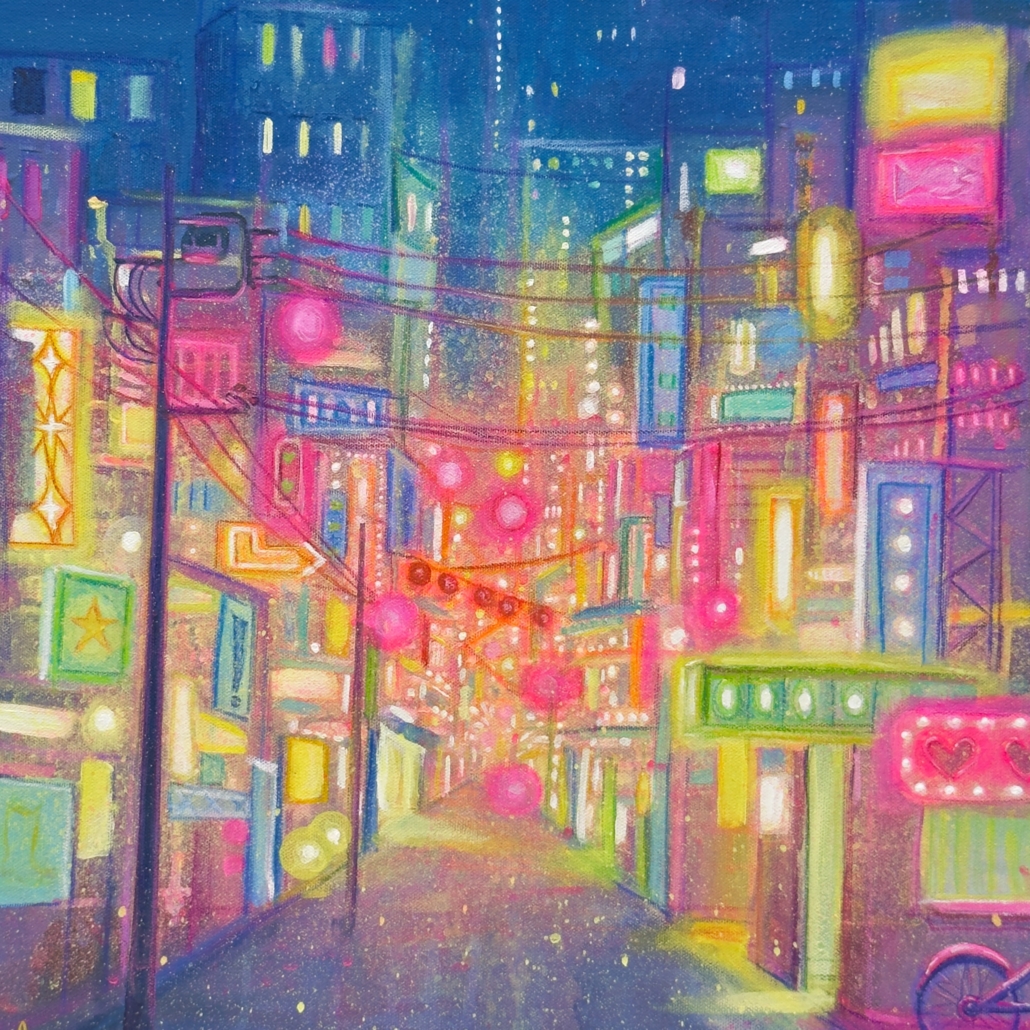
Walk through any large city and inevitably you will find a place so filled with shimmering lights and color as to make a medieval monk weep. We are of course, not generally so moved emotionally by the sight. If we could strip away all of the crass messages of capitalism and see with the pre-literate eyes of a child, perhaps we could see how the night shines. These colors sparkle like a stained glass cathedral, but they offer no messages of salvation, only salivation.

In the Studio:

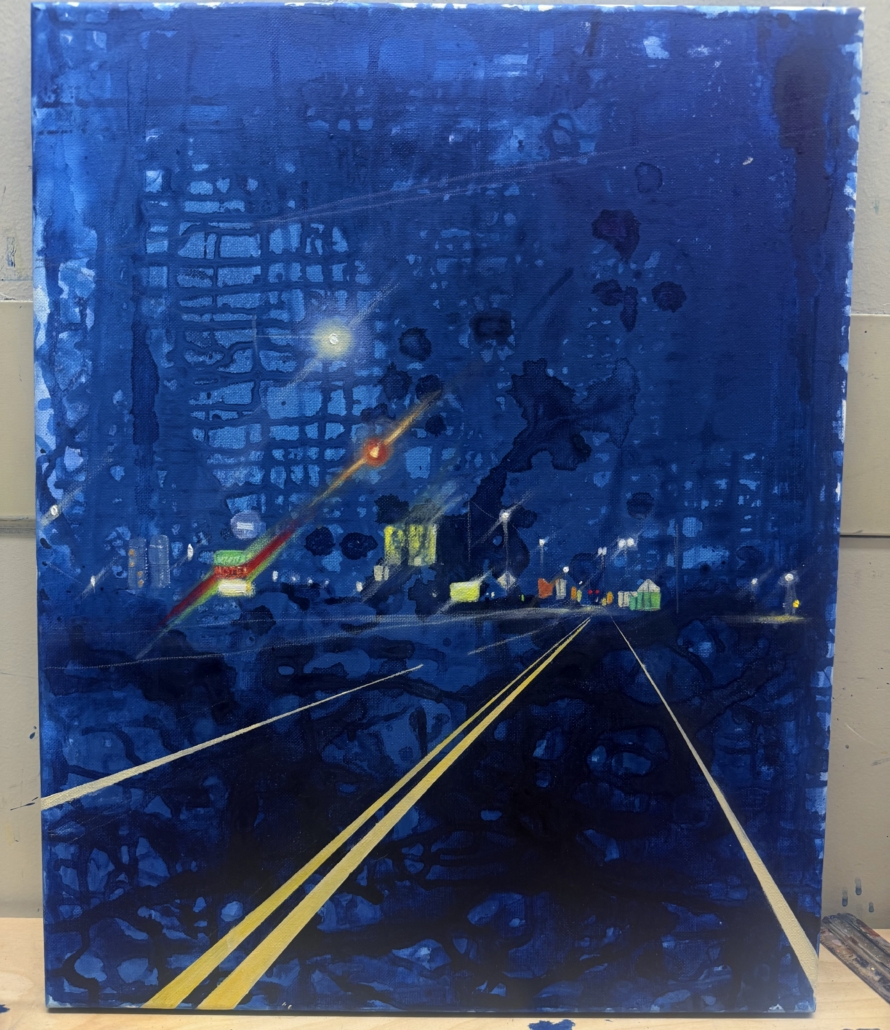
This painting was challenging due to the depictions of neon lights, and all of the lights collecting together. Many times through the process I would add another glaze of color thinking it would be sufficient, only to find it still was not as bold as I wanted. There was a push and pull between adding enough darkness to let the light shine and having enough light to depict my vision. Careful use of many techniques including some sprayed paint come together for this symphony of color.

Behind the Painting:

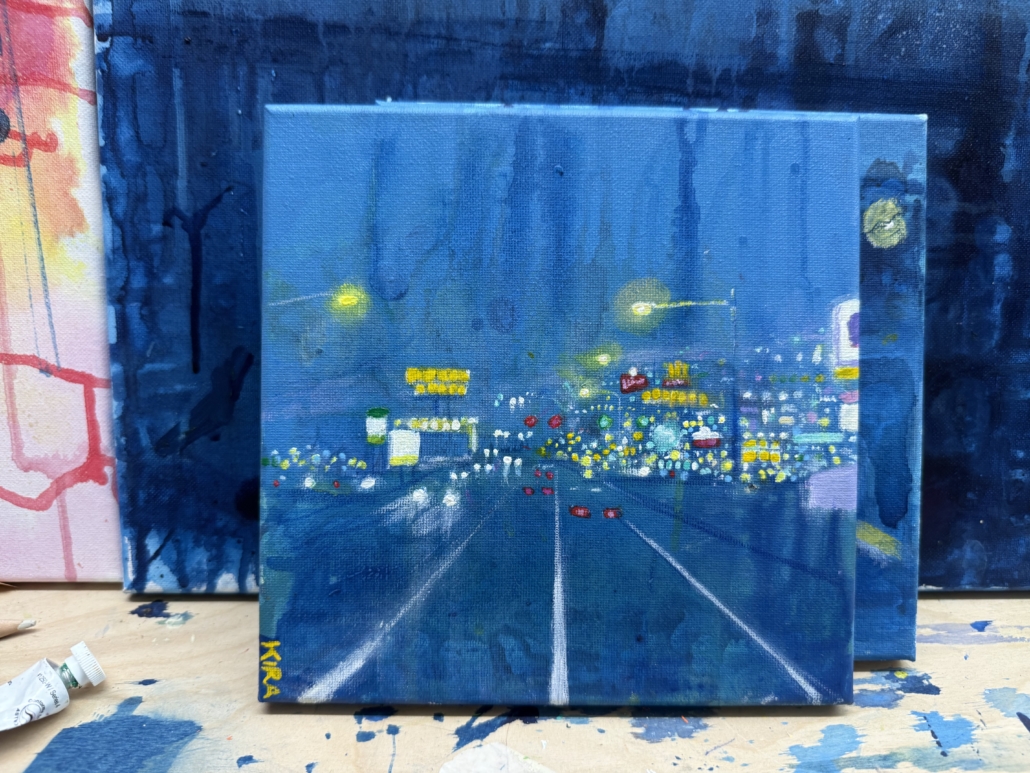
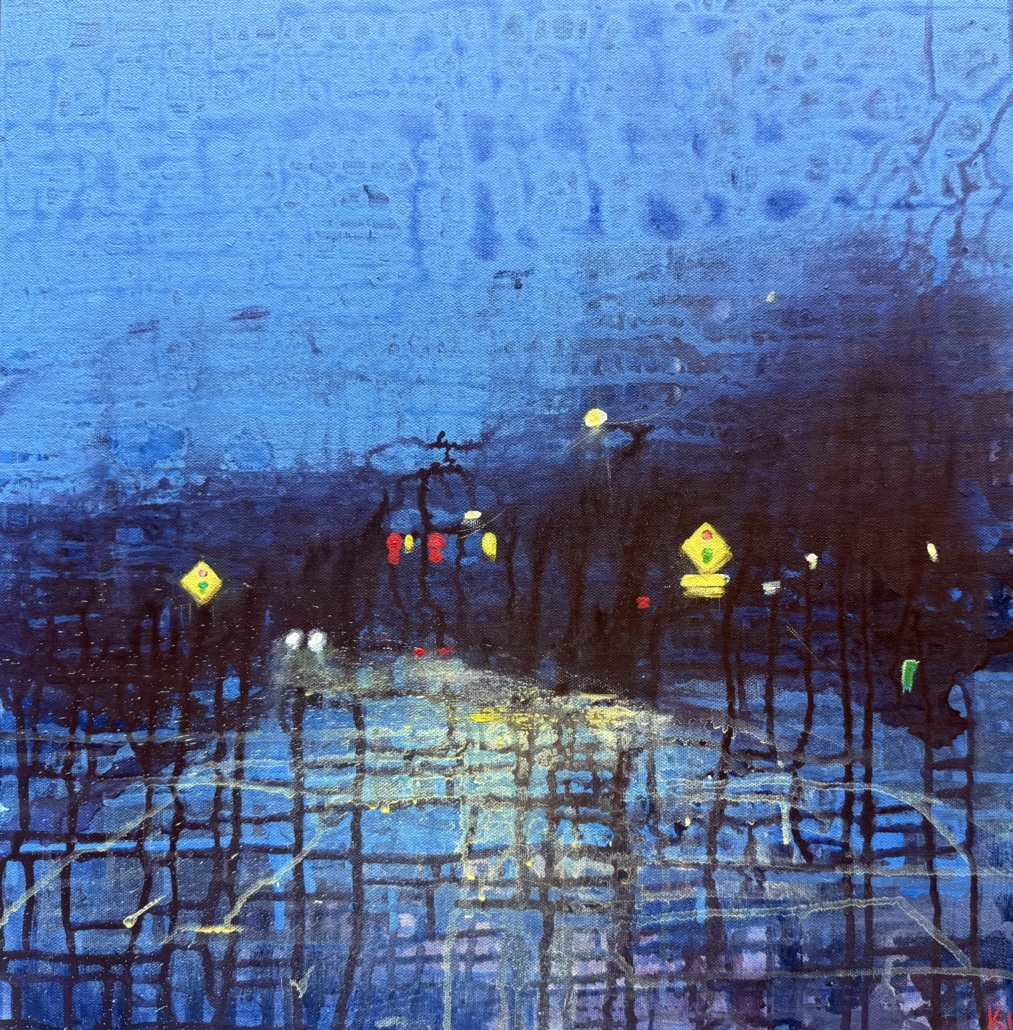
This series of paintings was inspired by the feeling of driving home after a long day. Coming home from the day’s activities, tired, warm, letting the scenery pass you by as if in a dream. Conceptually, the road represents our journey in life. The hero must face the path ahead and rise to meet any challenge in his path, yet after all the experiences that he gains from his journey, he has not truly won the battle until he returns home.

In the Studio:

This series used some techniques that I had not previously been employing on my canvas art, but was familiar from my work with watercolor. I have several spray bottles of water that I use in varying ways. I have a tiny bottle, which can put out a fine mist, leaving the paint mostly undisturbed. I have a large spray bottle for larger amounts of water output, or for creating a droplet effect, and I have a bottle with added wetting agent. Additionally I use squeeze bottles, droppers, and more to apply diluted paint to the canvas. I work in many, many layers. I add paint, sometimes selectively and sometimes allowing it to simply do what it will. This allows me to achieve a great deal of interesting texture and a sense of flow. The pigments in the mixed paint colors do not always behave the same way, occasionally creating striations and swirls of color as they dry.

Once I am satisfied with the background of the painting I spend time simply observing it. I look at the way the colors have created a burgeoning composition. Sometimes I do a sketch onto tracing paper, or sometimes I simply begin. I carefully observe the colors and details of the images I use for references, taking elements from several usually to create my final piece.

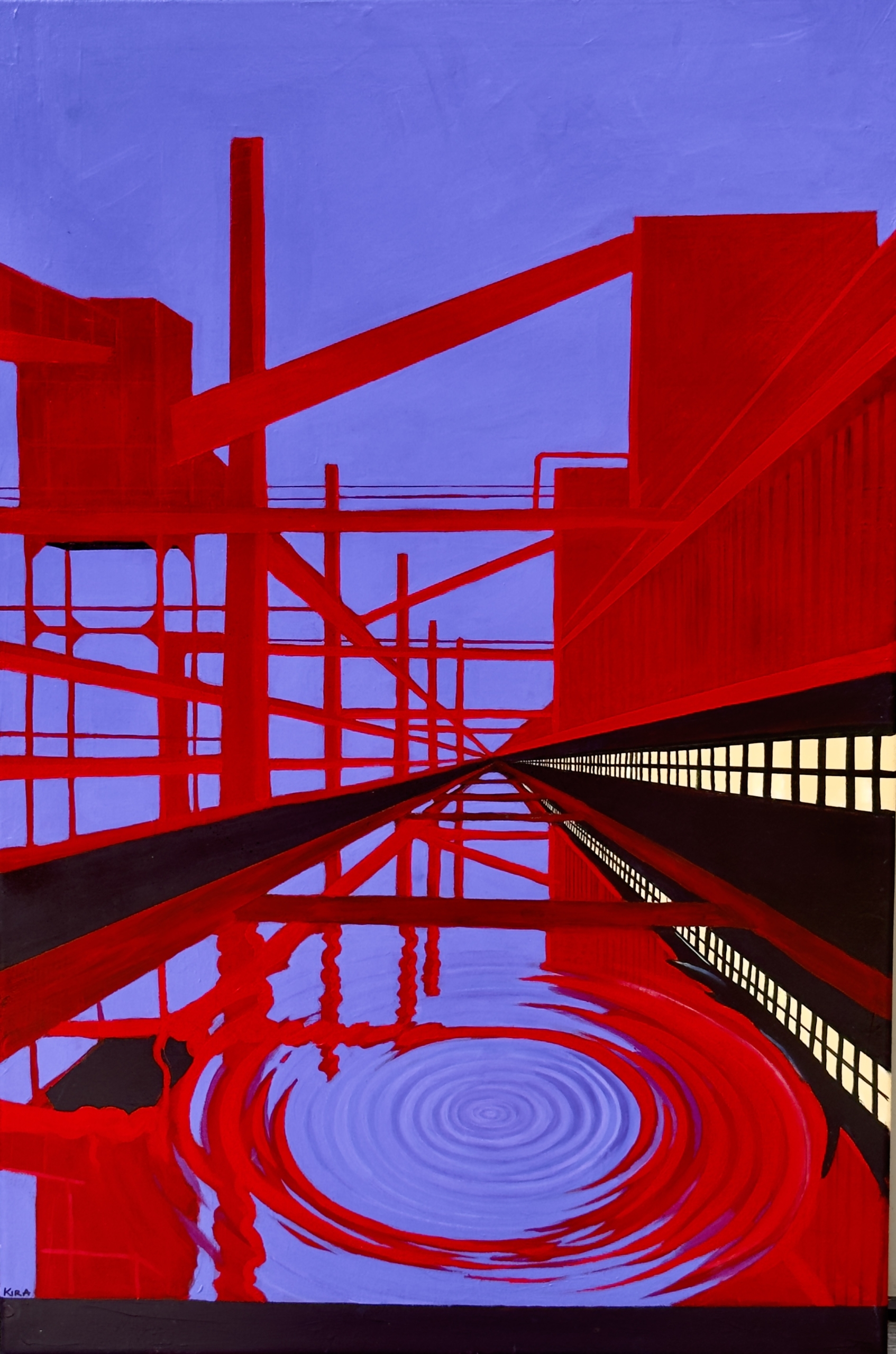
Echos

This painting is a tribute to the architecture of American industry—its sharp lines, towering structures, and the haunting beauty it leaves behind. I wanted to capture the feeling of standing in a place where machines once roared, now silent but still full of presence.

The bold red forms stretch across the canvas like scaffolding from a memory, intersecting and overlapping to create a sense of both structure and disorientation. The cool, reflective water below introduces a moment of quiet—disrupting the rigidity with a single ripple that radiates outward. That ripple became central to the piece: a symbol of impact, echo, and transformation.

Visually, the painting plays with perspective, symmetry, and light, leading the viewer down a corridor that feels both infinite and dreamlike. It’s rooted in Americana, evoking the spirit of industrial landscapes and the emotional weight they carry.

Echos is a meditation on presence and absence, order and memory. It reflects my ongoing interest in spaces that shape us, long after they’ve stopped functioning—and the beauty that lingers in their bones.

Acrylic on Canvas 10×10”

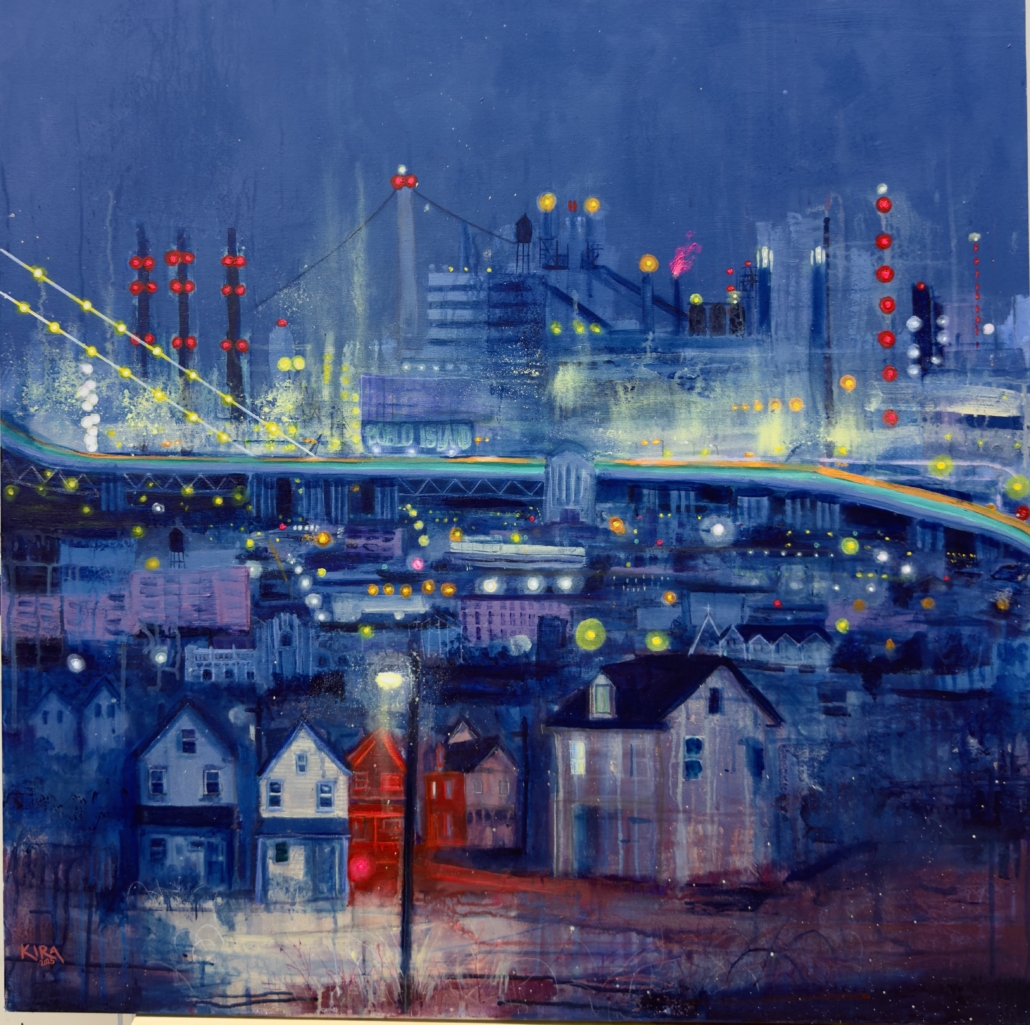
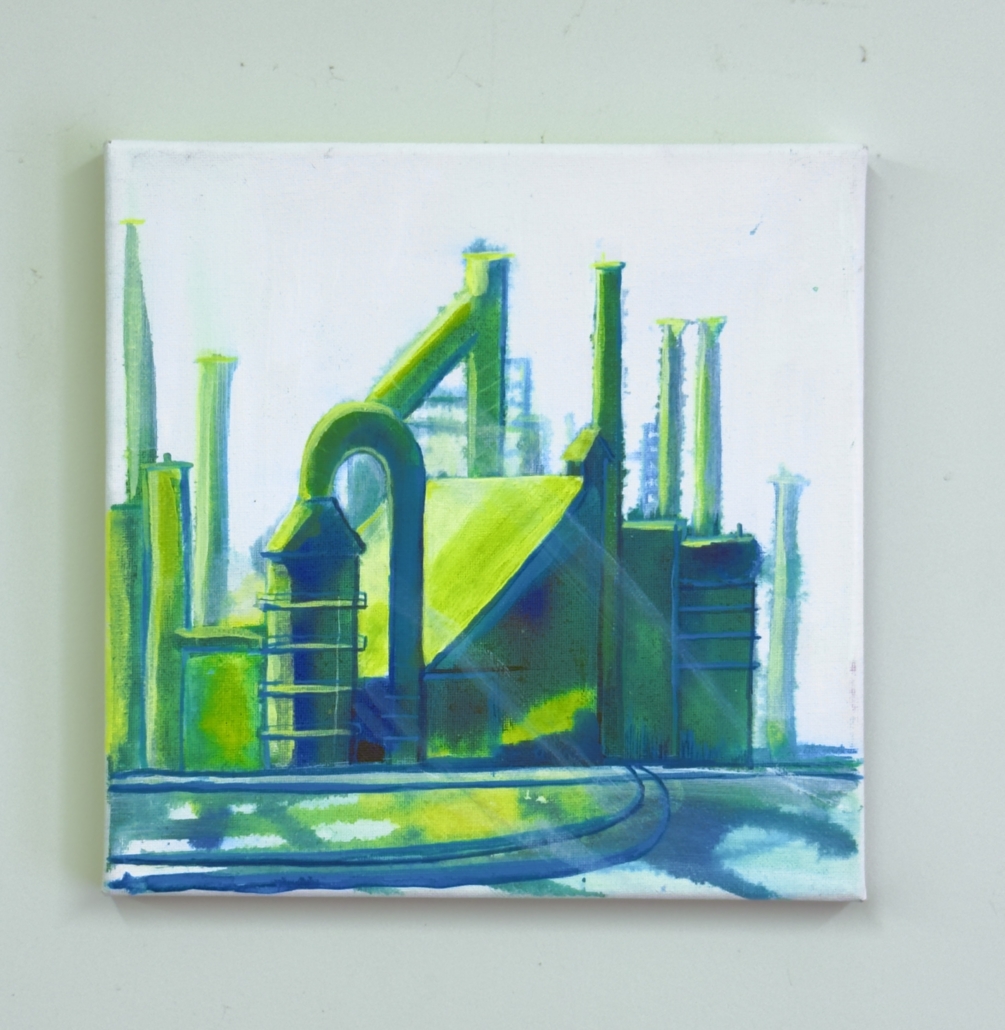
This vivid acrylic painting captures the monumental presence of Bethlehem Steel, reimagined through a palette of electric blues and acid greens. The layered industrial forms are softened by painterly washes and translucent veils of color, transforming steel and smoke into something luminous. This piece is part of my ongoing Rust Belt painting series, exploring industrial decline through the expressive potential of color. It’s a tribute to the grandeur and decay of American manufacturing history.