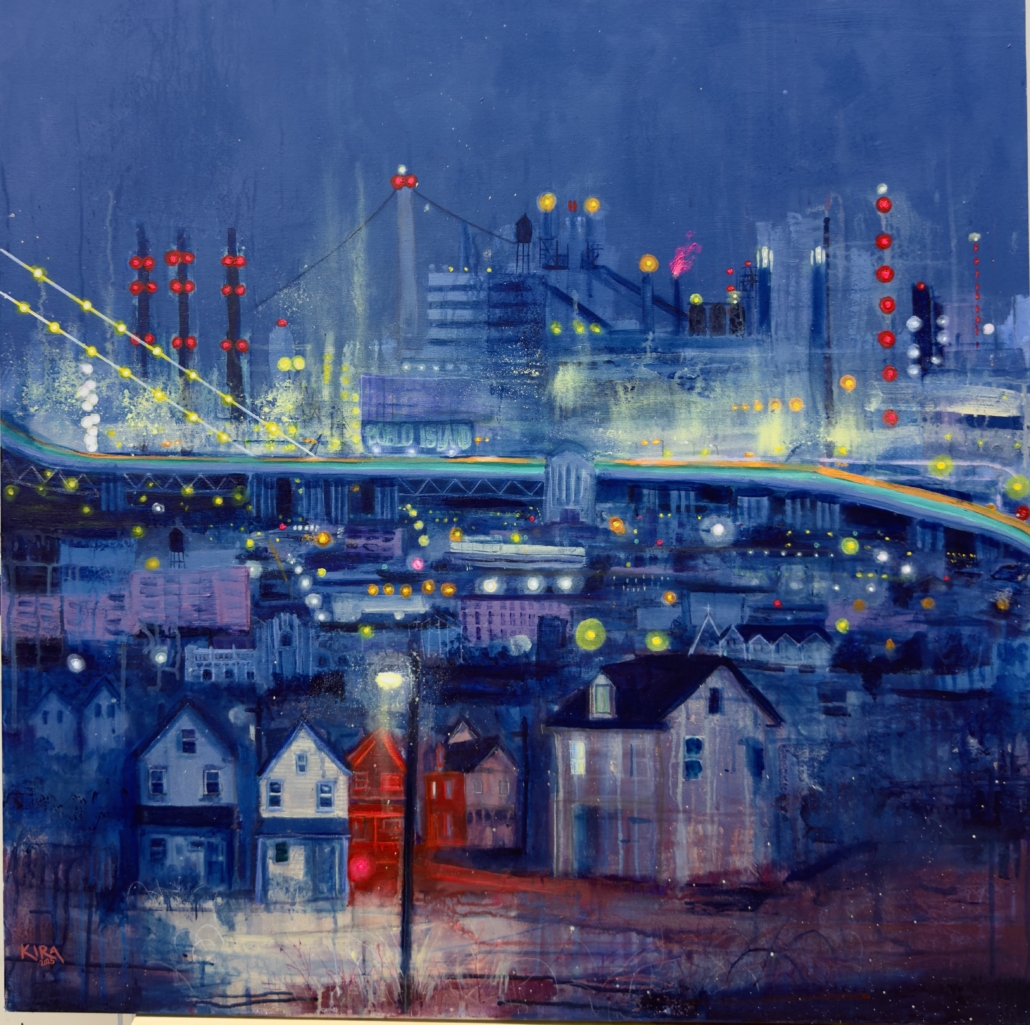
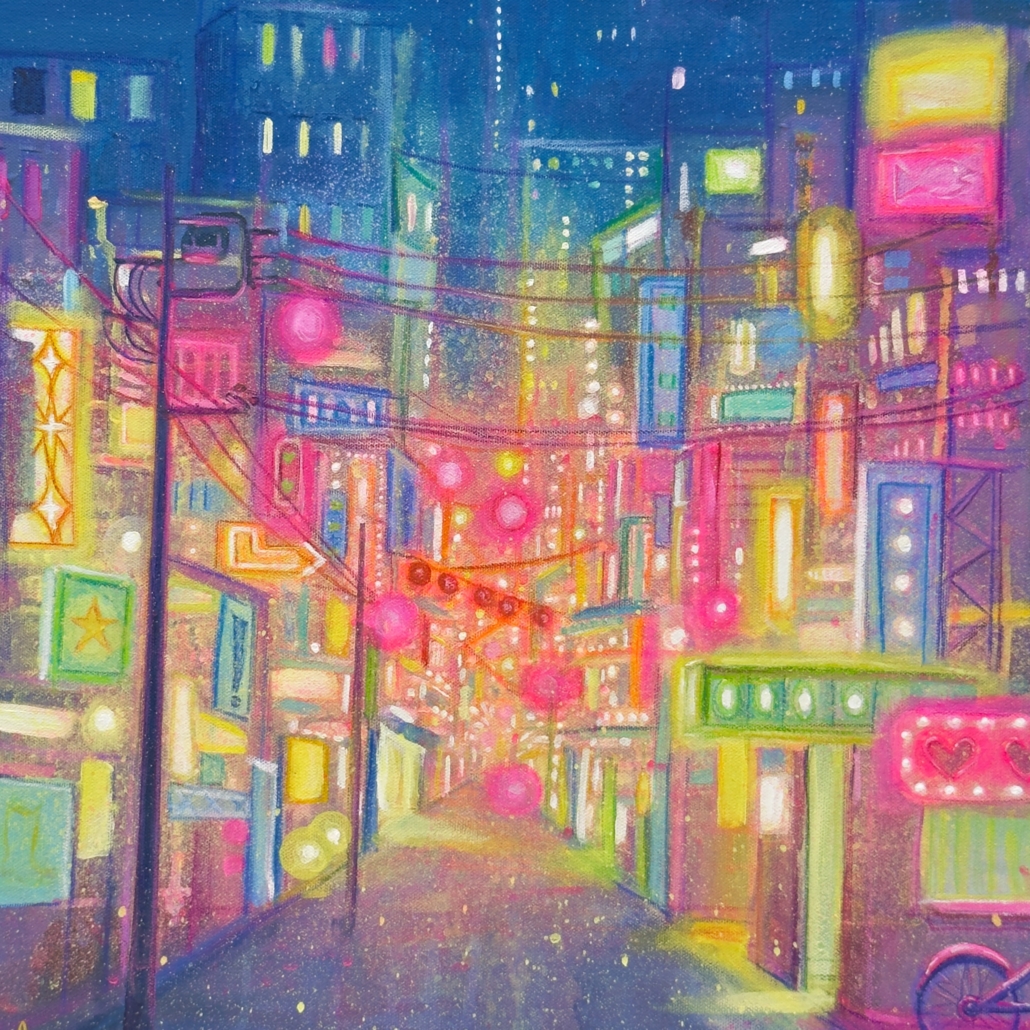
Walk through any large city and inevitably you will find a place so filled with shimmering lights and color as to make a medieval monk weep. We are of course, not generally so moved emotionally by the sight. If we could strip away all of the crass messages of capitalism and see with the pre-literate eyes of a child, perhaps we could see how the night shines. These colors sparkle like a stained glass cathedral, but they offer no messages of salvation, only salivation.

In the Studio:

This painting was challenging due to the depictions of neon lights, and all of the lights collecting together. Many times through the process I would add another glaze of color thinking it would be sufficient, only to find it still was not as bold as I wanted. There was a push and pull between adding enough darkness to let the light shine and having enough light to depict my vision. Careful use of many techniques including some sprayed paint come together for this symphony of color.
Behind the Painting:

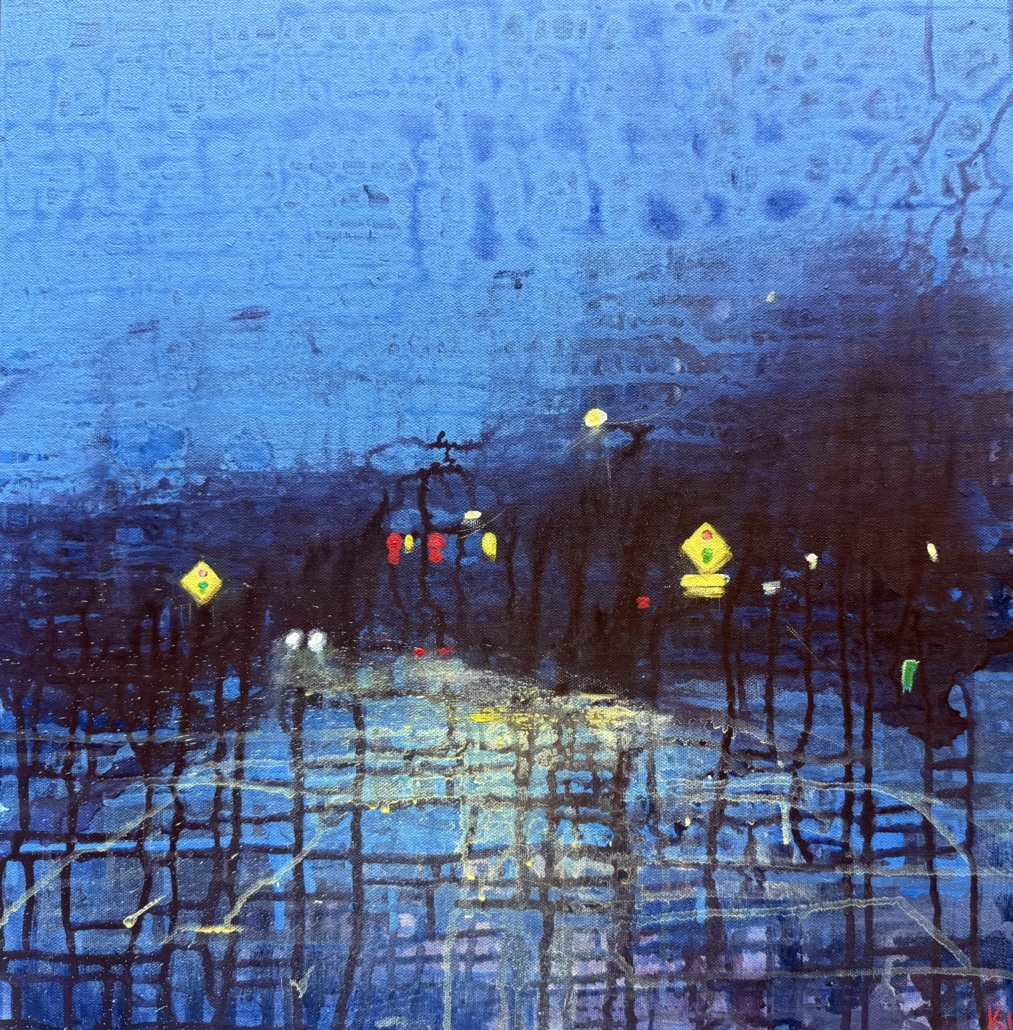
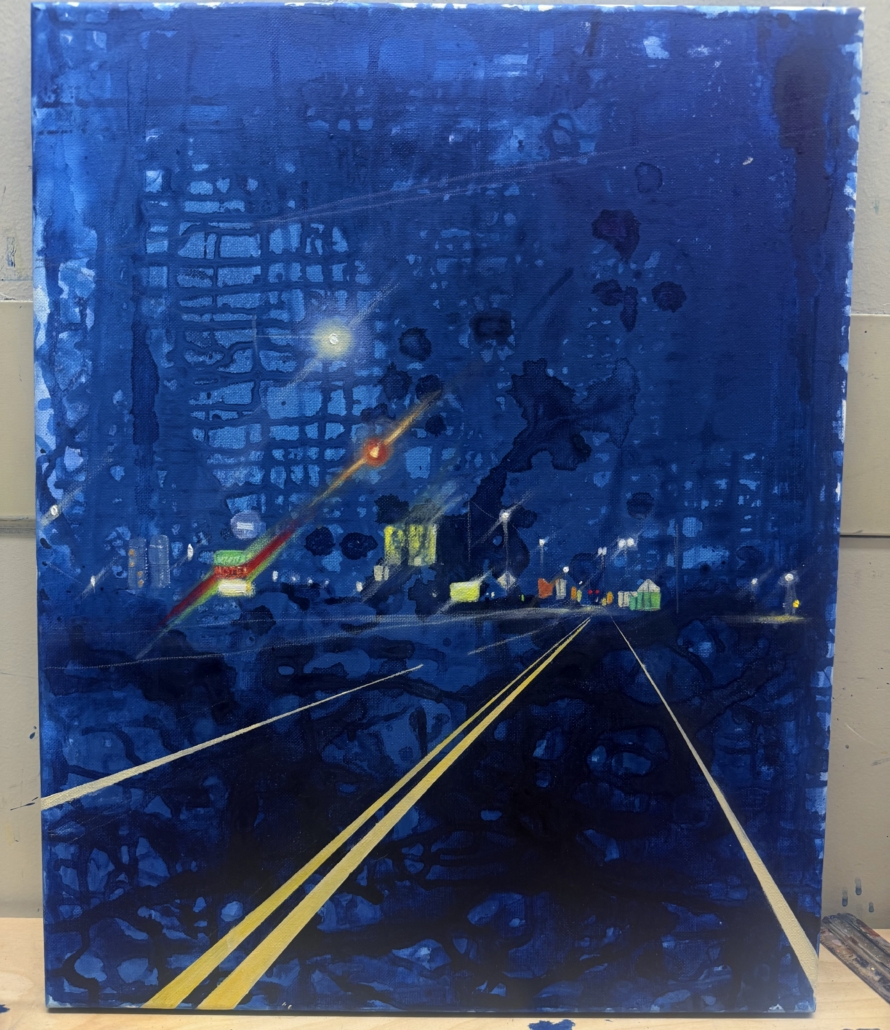
This series of paintings was inspired by the feeling of driving home after a long day. Coming home from the day’s activities, tired, warm, letting the scenery pass you by as if in a dream. Conceptually, the road represents our journey in life. The hero must face the path ahead and rise to meet any challenge in his path, yet after all the experiences that he gains from his journey, he has not truly won the battle until he returns home.

In the Studio:

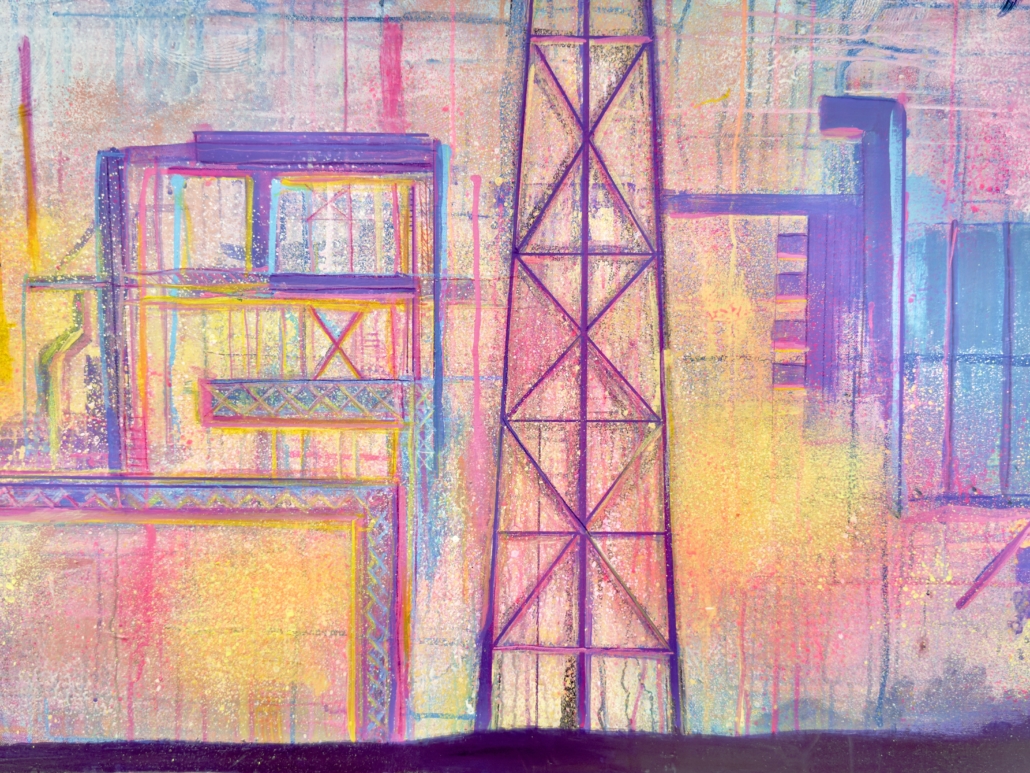
This series used some techniques that I had not previously been employing on my canvas art, but was familiar from my work with watercolor. I have several spray bottles of water that I use in varying ways. I have a tiny bottle, which can put out a fine mist, leaving the paint mostly undisturbed. I have a large spray bottle for larger amounts of water output, or for creating a droplet effect, and I have a bottle with added wetting agent. Additionally I use squeeze bottles, droppers, and more to apply diluted paint to the canvas. I work in many, many layers. I add paint, sometimes selectively and sometimes allowing it to simply do what it will. This allows me to achieve a great deal of interesting texture and a sense of flow. The pigments in the mixed paint colors do not always behave the same way, occasionally creating striations and swirls of color as they dry.

Once I am satisfied with the background of the painting I spend time simply observing it. I look at the way the colors have created a burgeoning composition. Sometimes I do a sketch onto tracing paper, or sometimes I simply begin. I carefully observe the colors and details of the images I use for references, taking elements from several usually to create my final piece.

Art and creativity are a practice, a habit. We can choose to keep innovating or we can stagnate. Sometimes to improve your craft, you need to learn how to let go of perfection and control. This series has been an exploration into a more organic and expressive vision.

Lately I have been returning to more watercolor techniques. When I was learning how to paint, I worked primarily in watercolor. I loved the gentle washes and the way pigments would granulate and pool. Acrylic doesn’t behave exactly the same way, it is much more robust and less prone to flights of fancy. It can require much more encouragement to make it behave the way I want it to. There are many times when I am surprised by the results of a layer once it dries. This is all in the magic of it. The practice of watching the paint drip and gently mix is meditative, but not passive. I am constantly adjusting and babying the layers of paint to make them work for me, moving the canvas, spraying more water, finding the perfect angle so the paint has the right amount of flow, there are many steps.

Life has taught me recently the importance of detachment. I can’t control everything, sometimes it feels like I can barely control anything in my life. All I can do is have faith, and let go.